

There’s a particular kind of cold you notice when you’re camping.
During the day, you’re busy walking, exploring, cooking and setting up camp. You might even be wondering why you packed that extra jumper.
Then the sun disappears.
Suddenly, you're sitting outside your tent with a warm drink, the temperature is dropping and you're very glad you brought that jumper after all.
Staying warm while camping doesn't have to be difficult. With the right sleeping gear, clothing and a few sensible habits, you can make those cooler nights much more comfortable.
So, before you zip yourself into your sleeping bag and hope for the best, let's look at what actually helps.
Start with the right sleeping bag
This is the obvious place to begin, and for good reason.
Your sleeping bag is one of the most important pieces of kit when it comes to staying warm outdoors.
The key is to choose one that's suitable for the temperatures you're expecting. A sleeping bag designed for a warm summer evening won't necessarily keep you comfortable during a cold spring or autumn night.
Look at the temperature information before you buy and consider the conditions you'll actually be camping in.
For cooler nights, a well-insulated sleeping bag can make a considerable difference.
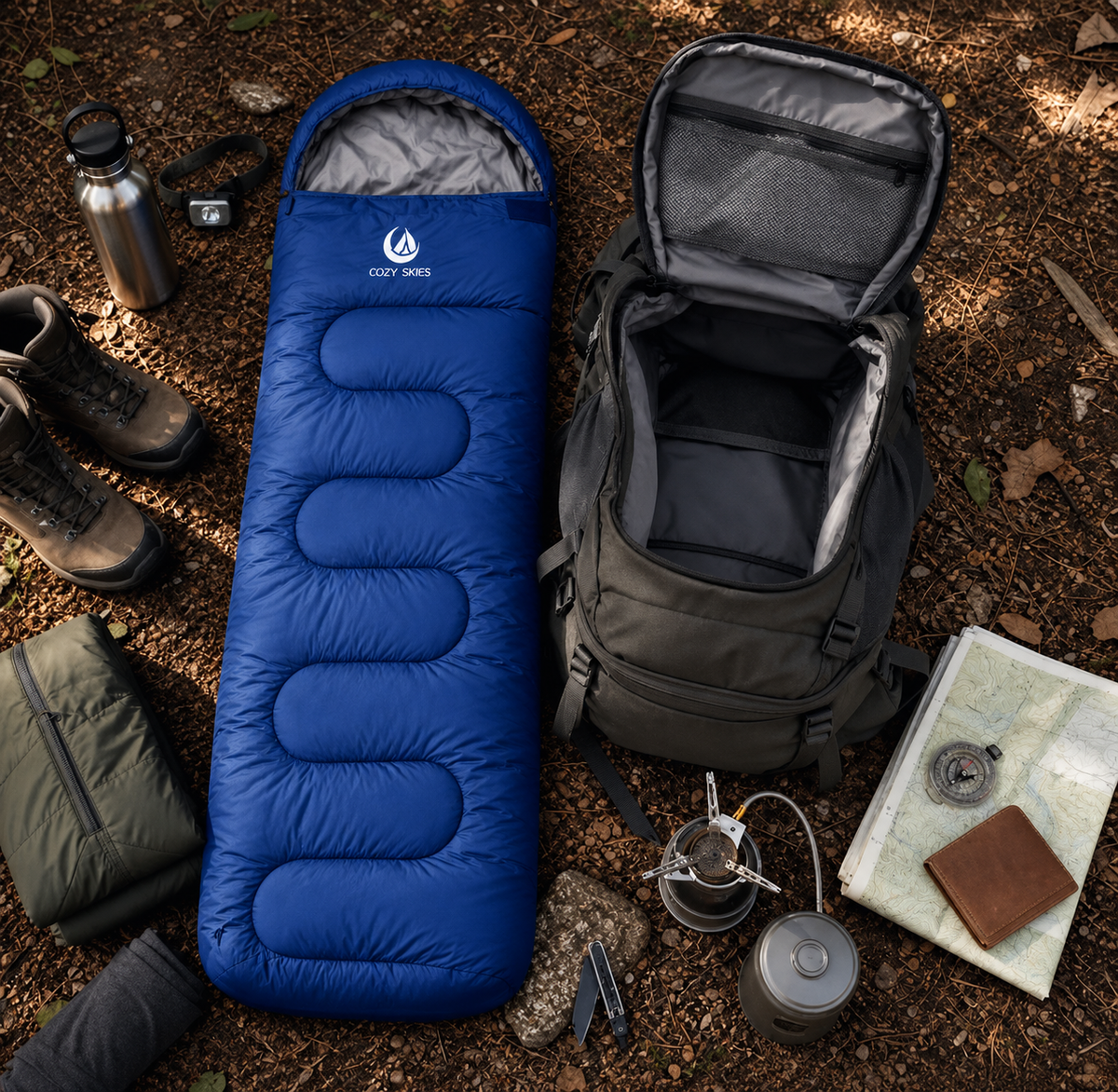
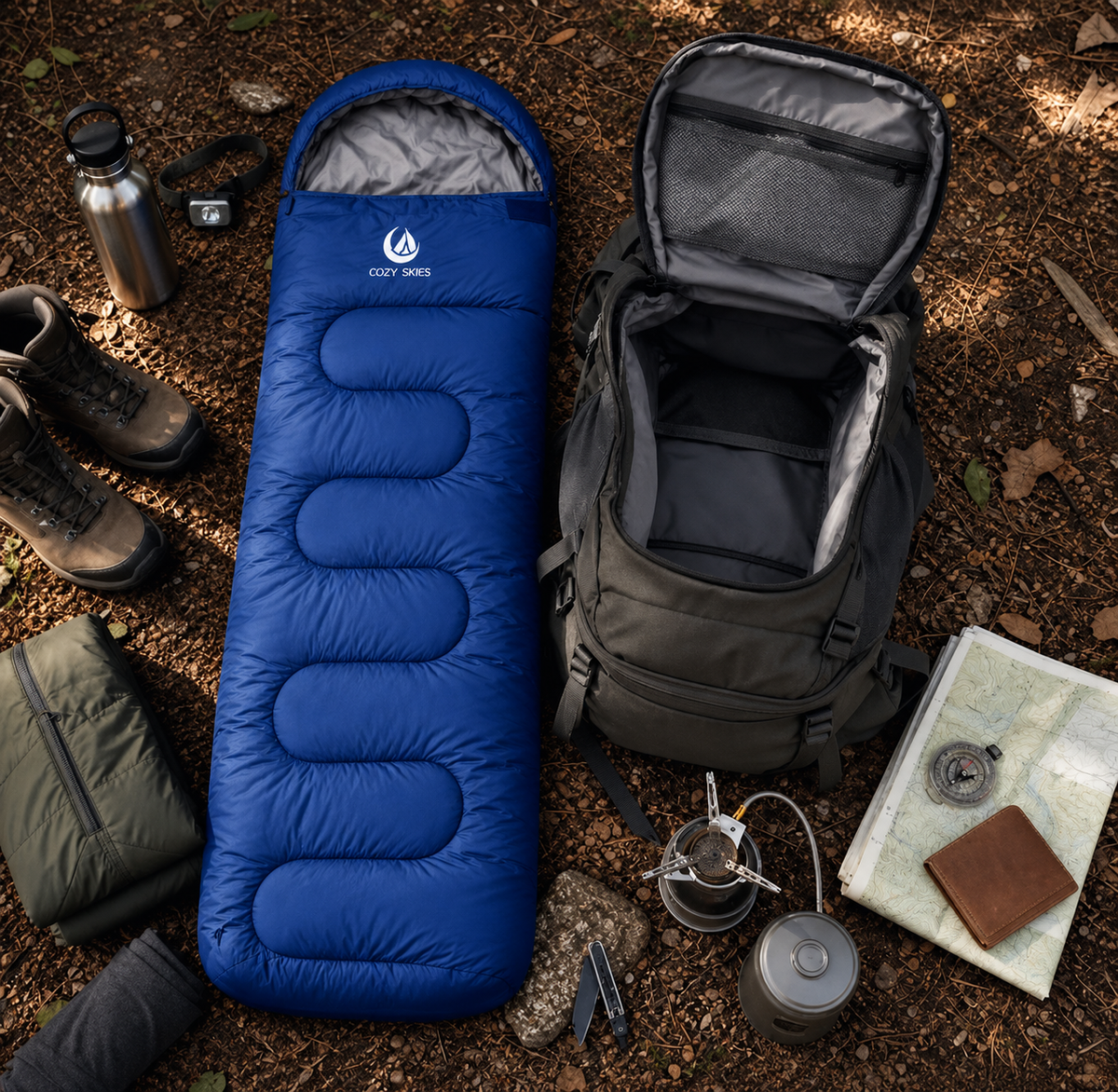
For example, the Cozy Skies sleeping bag uses 500gsm hollow fibre insulation and is designed for cooler nights, with an approximate temperature range of -5°C to 10°C.
Just remember that temperature ratings are a guide. How warm you feel will also depend on your clothing, sleeping mat, shelter and your own tolerance to cold.
Your sleeping mat matters too
Here's something many new campers overlook.
You can have a wonderfully warm sleeping bag and still feel cold if you're sleeping directly above chilly ground.
When you're lying down, the insulation underneath your body becomes compressed, reducing its ability to trap warmth.
A suitable sleeping mat helps create a layer between you and the ground while also making your sleeping setup much more comfortable.
If you're car camping, you can choose a thicker and more spacious mat.
If you're hiking or wild camping, you'll probably want something lighter and easier to carry.
Either way, don't treat your sleeping mat as an afterthought.
It can make a surprisingly big difference.
Get changed before bed
After a day outdoors, you might be tempted to climb straight into your sleeping bag wearing the clothes you've been walking around in.
It's better to change.
Put on a dry base layer before bed, particularly if your daytime clothes are damp from rain or sweat.
Dry socks can also make a huge difference.
A simple combination of clean, dry layers can help you feel much more comfortable when you settle down for the night.
And yes, pack that spare pair of socks.
You'll thank yourself later.
Don't wear too many layers
This might sound slightly odd, but piling on as many clothes as possible isn't always the best solution.
If your clothes are too tight or you're wearing so many layers that you compress your sleeping bag, you can reduce the space that helps trap warm air.
Instead, choose comfortable, dry layers that allow you to move freely.
A good base layer with a warm mid-layer is often more practical than trying to sleep in your entire wardrobe.
Keep your sleeping bag dry
Moisture and warmth aren't exactly best friends.
A damp sleeping bag will feel much colder than a dry one, so do what you can to keep it protected from rain, condensation and wet ground.
Keep your sleeping bag inside its storage or carry bag while you're setting up camp.
Don't leave it lying on the grass while you're pitching the tent.
And if your tent becomes damp inside, make sure there's enough ventilation to help reduce condensation.
A little airflow can go a long way.
Use your tent properly
Your tent is there to protect you from wind, rain and the elements.
Make sure it's properly pitched and that the outer layer is tensioned correctly. A badly pitched tent can allow cold draughts or moisture into your sleeping area.
At the same time, don't completely seal every ventilation point in an attempt to trap warmth.
Your breath and body heat can create condensation inside the tent, leaving everything damp by morning.
A good balance between protection and ventilation is the way to go.
Have a warm drink before bed
A warm drink in the evening can be a lovely way to warm up before settling into your sleeping bag.
A cup of tea, hot chocolate or another warm drink can become part of your evening camping routine.
Just don't drink so much that you're constantly waking up for the toilet.
That midnight walk across a cold campsite is not quite the adventure you had in mind.
Eat properly
Your body needs energy to stay warm.
After a long day of hiking or exploring, make sure you've had enough food before bed.
A warm evening meal can be particularly comforting on a cold night, and having a few snacks available is never a bad idea.
If you've spent the day walking several miles, your body may need more energy than usual.
So don't underestimate the humble camping dinner.
Keep a warm layer nearby
There's nothing worse than realising you're cold and discovering your warm jumper is buried somewhere at the bottom of your bag.
Keep an extra layer somewhere within easy reach.
A fleece, jumper or lightweight insulated jacket can be useful if the temperature drops unexpectedly.
You don't need to wear it from the moment the sun goes down. Just make sure you know where it is.
Warm your sleeping bag before getting in
This is a simple little trick.
Before getting into your sleeping bag, spend a few minutes moving around your campsite.
Pack away your belongings, brush your teeth, organise your kit or take a short walk around the campsite.
You don't need to work up a sweat.
The idea is simply to avoid getting into bed already feeling cold.
Once you're comfortably warm, climb into your sleeping bag and let the insulation do its job.
Keep your head comfortable
A lot of warmth can be lost through exposed areas, and your head can make a noticeable difference to how comfortable you feel.
If it's particularly chilly, a warm hat or beanie can help.
If your sleeping bag has a hood, use it when appropriate.
A good hood can provide extra warmth around your head and neck without requiring another bulky layer.
Don't go to bed cold
This is probably one of the simplest pieces of advice in this entire article.
If you're already freezing when you get into your sleeping bag, it can take quite a while to warm up.
Before bed, have something warm to drink, eat properly, put on dry layers and move around a little.
Then get into your sleeping bag while you're comfortable.
It's much easier to maintain warmth than to create it from scratch.
Keep your footwear and clothes organised
This might not directly warm you up, but it can make your morning considerably easier.
Keep your shoes, clothes and essentials somewhere dry and easy to reach.
If you're camping in colder weather, putting on cold, damp clothing first thing in the morning isn't exactly the nicest start to the day.
A little organisation the night before means you can get dressed quickly and get moving.
Choose the right campsite spot
Where you pitch your tent can affect how warm you feel.
Avoid exposed areas where you're likely to get hit by strong winds.
Look for a reasonably sheltered, flat area while still following campsite rules and avoiding unsafe locations.
Don't pitch somewhere that could collect water if it rains.
And if you're wild camping, always consider the wider environment and local regulations before choosing your spot.
A good campsite can make the whole night feel more comfortable.
A few things to avoid
When you're trying to stay warm, there are a few habits worth avoiding.
Don't sleep in wet clothes.
Change into dry layers before bed.
Don't put your sleeping bag directly on the ground.
Use a suitable sleeping mat.
Don't completely block tent ventilation.
Condensation can make your sleeping environment damp.
Don't ignore the temperature rating.
Choose a sleeping bag suited to the conditions.
Don't leave your warm layers buried in your luggage.
Keep them within easy reach.
These are small things, but together they can make a big difference.
Your simple cold-night camping routine
If you want to keep things easy, try this routine before bed:
1. Have a proper evening meal.
Give your body the energy it needs.
2. Change into dry clothes.
A clean, dry base layer and socks are ideal.
3. Have a warm drink.
Something comforting before bed can help you settle down.
4. Get your tent organised.
Keep everything dry and make sure your sleeping setup is ready.
5. Move around gently.
Stay comfortably warm without working up a sweat.
6. Get into your sleeping bag.
Use your hood or extra layers if needed.
7. Keep your warm clothes nearby.
You'll appreciate them in the morning.
Simple, isn't it?
Enjoy the cold nights
Camping isn't always about perfect weather.
Some of the most memorable nights outdoors happen when there's a crispness in the air, the campsite is quiet and the stars are bright overhead.
The trick is being prepared for it.
With a suitable sleeping bag, a good sleeping mat, dry clothing and a little planning, cooler nights can actually become one of the best parts of camping.
At Cozy Skies, the idea is simple: make outdoor nights more comfortable so you can spend less time worrying about the temperature and more time enjoying where you are.
Because when you've spent the day exploring, there's nothing quite like getting back to camp, settling into a warm sleeping bag and listening to the outdoors go quiet.
Sleep well. Stay warm. Explore further.

Leave a comment
This site is protected by hCaptcha and the hCaptcha Privacy Policy and Terms of Service apply.