

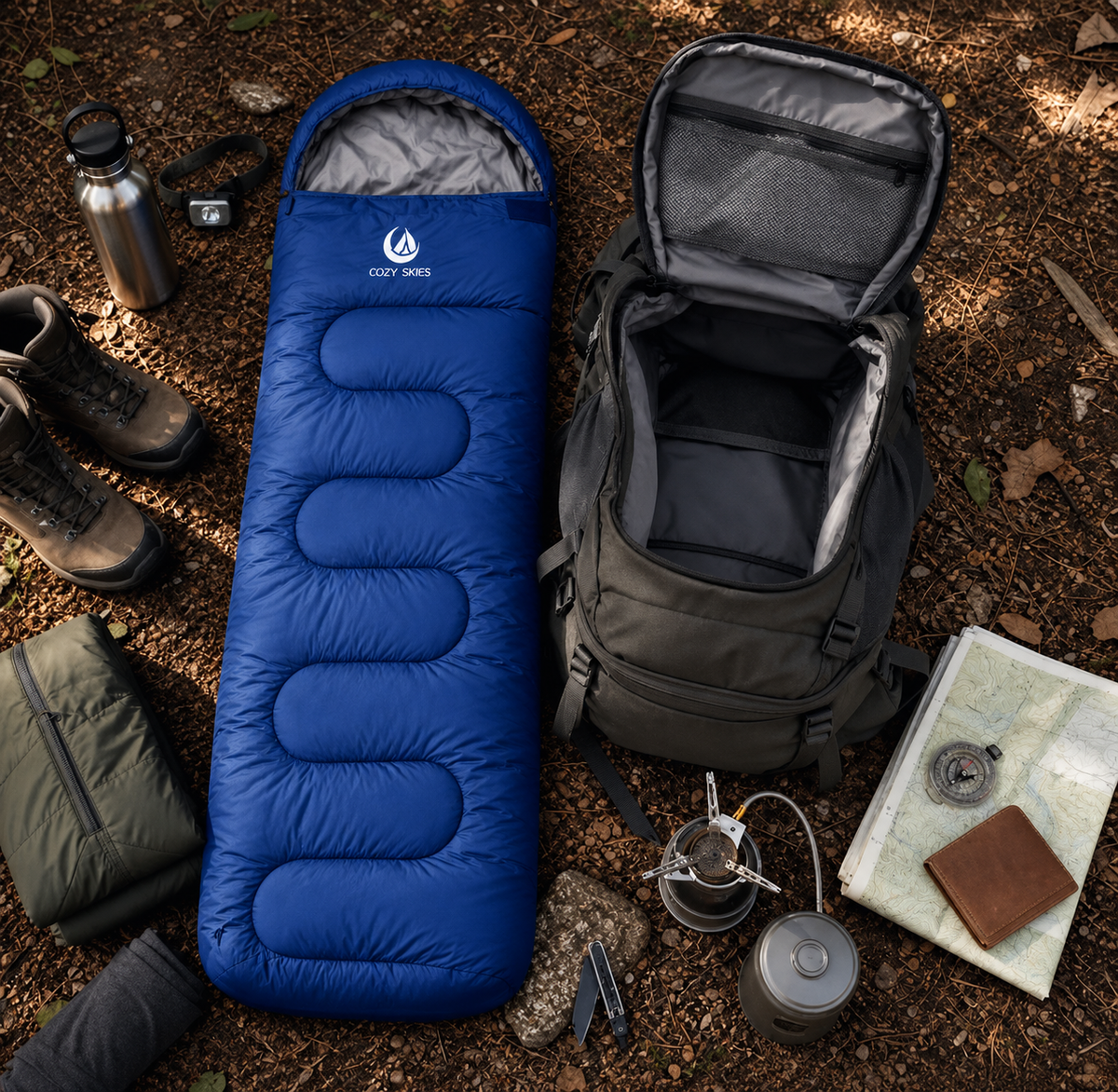
There’s something rather special about waking up outdoors.
You unzip the tent, step outside and suddenly there’s fresh air, quiet woodland, a misty lake or a view you simply wouldn’t get from your bedroom window. But let’s be honest — a beautiful campsite loses some of its charm when you’ve spent half the night shivering.
That’s where your sleeping bag comes in.
It might look like a simple bit of camping kit, but choosing the right one can make your whole trip more comfortable. The good news? You don’t need to be an outdoor expert to get it right.
Let’s break it down.
Start with where and when you’re camping
Before looking at colours, shapes or features, think about when and where you’ll actually use your sleeping bag.
A summer camping trip in the UK is very different from a chilly night on a Scottish hillside. Even in warmer months, temperatures can drop once the sun goes down, so it’s worth planning for the conditions rather than simply looking at the daytime forecast.
Ask yourself:
- Are you mainly camping in spring and summer?
- Do you enjoy camping in cooler months?
- Will you be wild camping or staying at organised campsites?
- Are you hiking with your gear or travelling by car?
- Do you tend to feel cold at night?
Your answers will help narrow down the right type of sleeping bag.
Pay attention to the temperature rating
This is probably the most important thing to look at.
Sleeping bags are designed with different temperature ranges, so you’ll want one suited to the conditions you expect to encounter. A bag that feels lovely on a warm summer evening might not be enough for a colder night.
For general camping, look for a sleeping bag that gives you a comfortable amount of warmth without making you feel like you’re wrapped in a duvet on a summer afternoon.
And remember, temperature ratings are a guide. Your clothing, sleeping mat, tent, weather conditions and even how naturally warm or cold you sleep can all affect how comfortable you feel.
If you’re unsure, it’s generally better to have a little extra warmth available than to find yourself wishing you had brought another layer at 2am.
Think about the shape
Sleeping bags come in different shapes, and this can make a surprising difference to comfort.
A mummy-style bag is narrower around the feet and legs, helping to reduce unused space. It can be a good option for hiking and colder conditions.
An envelope-style sleeping bag, on the other hand, gives you more room to move around. If you like to stretch your legs, change sleeping positions or simply dislike feeling restricted, this style can be a much more comfortable choice.
For relaxed camping, festivals, caravan trips and general outdoor use, that extra space can be a real bonus.
After all, there’s nothing worse than trying to get comfortable and discovering your sleeping bag has other ideas.
Don’t forget about insulation
The filling inside your sleeping bag plays a big part in how warm it feels.
Synthetic insulation is popular for camping because it is practical, easy to care for and generally dries more quickly than natural alternatives. It can also be a sensible choice for unpredictable British weather.
For regular camping trips, look for a sleeping bag with enough insulation for the conditions you’re expecting. If you’re planning cooler nights, additional insulation can help you stay comfortable when temperatures dip.
At Cozy Skies, the focus is simple: warmth, comfort and practical outdoor use. A good sleeping bag should feel like a dependable part of your kit rather than something you have to think about all night.
Consider the weight and size
If you’re driving to your campsite, weight might not be your biggest concern.
But if your sleeping bag is going into a backpack and you’re walking for miles, every bit of weight and packed space starts to matter.
A lightweight, compact sleeping bag can make packing much easier, particularly when you're already carrying a tent, clothing, food, water and other essentials.
For car camping or caravan trips, you have a bit more freedom. You can choose something roomier and prioritise comfort without worrying quite so much about every gram.
So, think about the journey as well as the night itself.
Look at the materials
A sleeping bag is going to spend plenty of time outdoors, so durability matters.
Look for materials that feel comfortable against the skin while also being practical enough for regular camping. A durable outer fabric can be particularly useful when you're moving between tents, campsites, campsfires and muddy bits of ground.
And then there’s the inside.
A soft lining might seem like a small detail, but after a long day of hiking, it can make climbing into your sleeping bag feel considerably nicer.
That little bit of comfort goes a long way.
Check the hood and zip
Small details can make a sleeping bag much easier to use.
A hood can provide additional warmth around your head on colder nights, while a good zip makes getting in and out less of a faff.
Some sleeping bags also have features such as zip guards, adjustable hoods or wider openings. These may not sound exciting when you're shopping, but you'll appreciate them when you're tired, it's dark and you're trying to get settled.
Sometimes the best camping gear is simply the gear that makes things easier.
Think about how you'll carry and store it
A sleeping bag shouldn't just be comfortable when you're inside it. It should also be manageable when you're packing up.
A matching carry or compression bag can make storage and transport much easier, especially if you're moving between locations.
For weekend camping, festivals, hiking trips or caravan adventures, being able to pack your sleeping bag neatly means more room for the things you actually want to bring.
And yes, that probably includes snacks.
Match your sleeping bag to your style of camping
There isn't one perfect sleeping bag for everyone.
Your ideal choice depends on how you like to spend your time outdoors.
Camping:
If you're staying at campsites and travelling by car, comfort and space may be your biggest priorities.
Wild camping:
You'll probably want something practical, warm and easy to carry, especially when your entire kit is on your back.
Hiking & backpacking:
Weight and packability become more important when you're covering long distances.
Caravan & motorhome trips:
You can prioritise warmth and space without worrying quite as much about packed size.
The best sleeping bag is ultimately the one that fits your adventure.
Don't forget your sleeping mat
Here’s something many first-time campers overlook: your sleeping bag isn't the only thing keeping you comfortable at night.
The ground underneath you can feel surprisingly cold, even when your sleeping bag is warm. A suitable sleeping mat provides insulation from the ground as well as a bit of cushioning.
Think of your sleeping setup as a team — sleeping bag, mat and shelter all working together.
Get the combination right and settling down after a long day outdoors becomes something to look forward to.
A few simple things can make your night warmer
You don't necessarily need to pile on layers to stay comfortable.
Get changed into dry clothes before bed, keep your sleeping bag dry, and avoid going to bed in damp clothing. A warm drink before settling down can also feel rather nice after a chilly evening outside.
Most importantly, don't wait until you're freezing before getting into your sleeping bag.
Once you're cold, warming yourself back up can take a while. It's much easier to stay comfortable from the start.
So, which sleeping bag is right for you?
If you're still unsure, keep it simple.
Think about the temperatures you'll encounter, the way you camp, how much space you need and how far you'll need to carry it.
For relaxed camping and outdoor adventures, an envelope-style sleeping bag with good insulation, a comfortable lining and a practical carry bag can be a brilliant all-rounder.
For longer hikes and backpacking trips, focus more heavily on weight, packed size and warmth.
And if you're someone who likes a bit of room to move, don't sacrifice comfort simply because a narrower sleeping bag looks more compact.
Your sleeping bag is where you'll spend a good part of the night. It should work for you.
Ready for your next night outdoors?
The best camping memories aren't always about reaching the summit or finding the perfect campsite.
Sometimes they're about sitting beside a tent as the sun goes down, hearing the trees move in the wind, looking up at a sky full of stars and knowing you've got a warm, comfortable night ahead.
That’s what good outdoor gear should help with.
At Cozy Skies, we keep the focus on practical sleeping gear designed for camping, wild camping, hiking and nights spent outdoors. So, pack your kit, pick your spot and get ready to settle in.
The outdoors is calling. Make sure you sleep well when you get there.
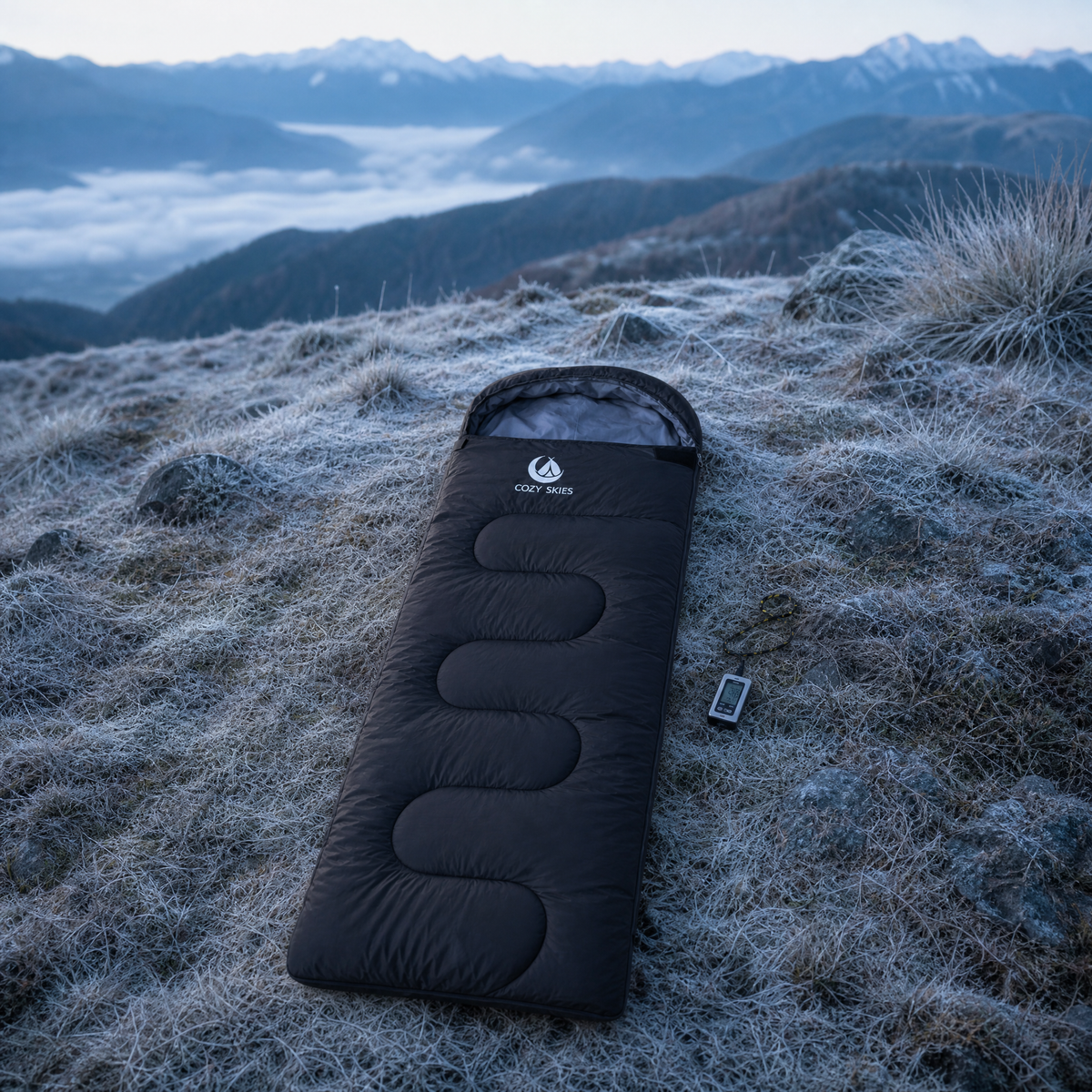

Leave a comment
This site is protected by hCaptcha and the hCaptcha Privacy Policy and Terms of Service apply.